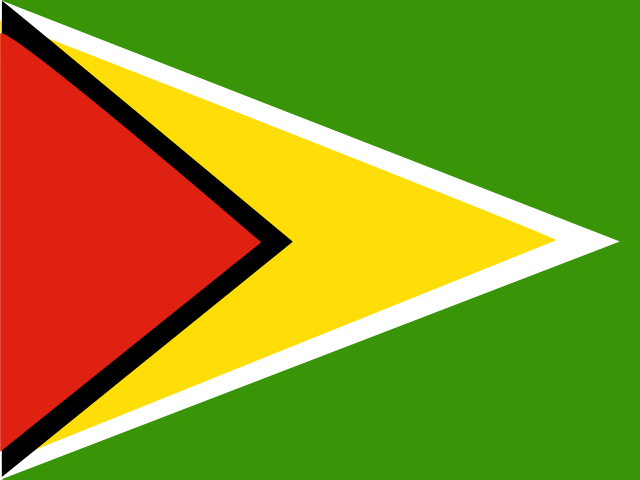
 Trademarks in Guyana
Competent Authority
The national authority responsible for trademark registration and administration in Guyana is the Deeds and Commercial Registries Authority (DCRA), operating through the Patent and Trade Marks Office located in Georgetown. The system is national, governed under the Trade Marks Act (Cap. 90:01) of the Laws of Guyana. The official working language is English.
International Treaties
Guyana is a member of the Paris Convention for the Protection of Industrial Property. However, Guyana is not a member of the Madrid System (neither the Madrid Agreement nor the Madrid Protocol); therefore, international registrations via the Madrid route cannot designate Guyana, and filings must be executed directly through national procedures or based on existing United Kingdom registrations where applicable under local historical statutes.
Who May Apply & Representation
Any natural or legal person, domestic or foreign, may apply for a trademark registration. Foreign applicants or those not domiciled in Guyana must appoint and be represented by a local registered trademark agent or representative-at-law. Representation requires a signed Authorization or Power of Attorney (POA) executed by the trademark owner.
Online Filing & Search Databases
Applications are submitted directly to the Deeds and Commercial Registries Authority. Manual processing and physical document submission are heavily integrated into local registry workflows.
Protectable Trademark Types
Under Guyanese law, a trademark may consist of words, designs, letters, slogans, devices, or symbols used or proposed to be used in relation to goods to indicate a connection in the course of trade.
Classification System
Guyana historically structured its internal trademark practice around local classification conventions, though modern filings coordinate with the Nice Classification system. Multi-class applications are generally restricted unless tied to specific provisions or prior United Kingdom-based extensions.
Examination Procedure
The Registrar evaluates applications for formal compliance, statutory registrability, and potential conflicts against prior entries on the register. Official actions or requisitions are issued if clarifications or adjustments to the application documents are necessary.
Publication & Opposition
Once accepted by the Registry, trademark applications are advertised or published to allow third-party review. Interested parties may file formal oppositions within the statutory window if the mark conflicts with prior rights or statutory bars.
Timelines
For a straightforward application that encounters no administrative objections or third-party oppositions, the average timeframe from initial filing to the issuance of the certificate of registration is approximately 3 months once all formal requirements are satisfied.
Official Fees
Official statutory fees designated by the Deeds and Commercial Registries Authority include:
- New Application Fee: 100 GYD
- Registration Fee: 200 GYD
- Renewal Fee: 200 GYD
- Assignment / Subsequent Proprietor Fee: 300 GYD
- Change of Name or Address Fee: 50 GYD
Duration & Renewal
For standard local filings, initial trademark registration protection is granted for 7 years from the date of filing. Registrations can be renewed for subsequent periods (typically 14 years). A grace period applies for late renewals subject to restoration procedures.
Use Requirements & System Type
Guyana operates primarily on a first-to-file framework, though historical common law priority concepts influence local enforcement. Trademarks are subject to non-use vulnerability rules if left unexploited or abandoned for statutory periods following registration.
Post-Registration Procedures
Recorded changes concerning the owner's name, corporate address, assignments (ownership transfers), and mergers must be registered officially with the DCRA to ensure legal validity and public notice.
Legal Remedies & Enforcement
The registered proprietor is entitled to bring an action for trademark infringement before local judicial courts to protect against unauthorized commercial use. Civil remedies, injunctions, and damage claims are available under the Trade Marks Act.
This article is for informational purposes only and does not constitute legal advice or consultation. To receive personalized and in-depth guidance tailored to your specific situation, we invite you to schedule a consultation.
Talk to a specialist
The first consultation is free. Tell us what you need and when suits you, and we reply to agree a time.
What helps us answer well
- The name or logo you want to protect
- What you sell or offer under it
- The countries where you work or plan to
- Whether you already have an application or registration
- Any date you need to meet